

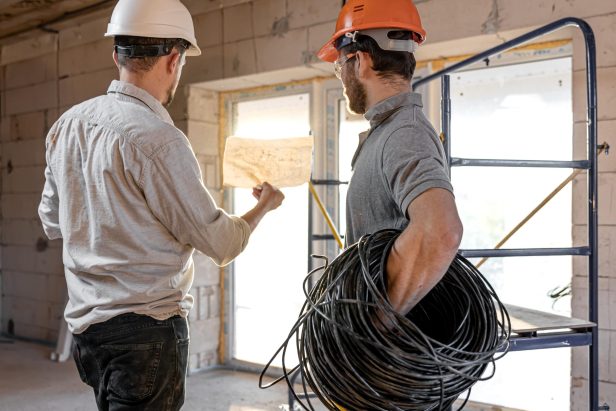
Low-EMF electrical wiring is a specialized approach to electrical design. It focuses on precise layout strategies and installation practices to prevent the common, overlooked wiring mistakes that trigger elevated electromagnetic field (EMF) exposure.
In this article, we explain what low-EMF wiring looks like for new-build homes, the typical electrical errors that cause high magnetic fields, and how we systematically design and verify a clean system.
Looking to fix an existing property? If you want to identify and resolve electrical issues in a finished structure, learn more about our EMF correction in existing homes.
Every home has wiring, but not every home is wired the same way. How conductors are routed, paired, and terminated changes the magnetic fields, electrical noise, and current behaviour inside a building, sometimes dramatically.
For most electricians, wiring means “hot, neutral, ground” and nothing more; we design and correct wiring to also minimize unnecessary electromagnetic fields, a discipline that combines standard electrical code compliance with EMF measurement and engineering precision.
 By Farzad Nejatpour, P.Eng., Master Electrician, EMF Consultant, Founder, Noradiation Inc.
What Is Low-EMF Wiring?
Low-EMF wiring is an electrical design and correction approach that:
- Minimizes 60 Hz magnetic fields through correct conductor geometry
- Reduces stray current on unintended paths (plumbing, ductwork)
- Prevents ground loops and parallel neutral returns
- Eliminates unnecessary electrical noise
- Maximizes phase cancellation between hot and neutral conductors
- Corrects wiring errors that can significantly elevate measured fields
- Uses shielded (AC) cable where appropriate
- Keeps panel conductors as short as possible, without unnecessary loops or slack
This isn’t alternative science; it’s our standard electrical engineering, applied with more precision than a typical installation requires in Noradiation new construction and electrical renovation wiring methods.
Correctly wired circuits keep magnetic fields low as a byproduct of good design; several common wiring errors can raise them well above what’s typical, often without any visible sign in the finished space.

7 Main Sources of Elevated Magnetic Fields in Homes
These wiring conditions are common across Ontario’s housing stock, particularly in older homes:
- Improper conductor separation. When hot and neutral conductors run apart instead of tightly paired, their magnetic fields don’t cancel effectively.
- Neutral-ground bonds downstream of the main panel. This creates parallel return paths and elevated field readings.
- Stray current on water pipes, plumbing, or ductwork. Usually caused by poor bonding, loose neutrals, or wiring errors elsewhere in the system.
- Open neutrals, loose neutrals, or bootleg grounds. These create unpredictable field patterns that vary by load.
- Aluminum wiring degradation. High-resistance connections can produce dirty electricity and arcing.
- Knob-and-tube wiring. By design, hot and neutral conductors run separately rather than paired in the same cable, reducing the phase-cancellation effect that keeps fields low in modern wiring.
- Physical damage to conductors. Nails, screws, or other damage that compromises neutral insulation can create an unintended short between neutral and ground.
These conditions aren’t something a homeowner can identify by inspection; they require measurement by someone trained in EMF assessment.
The Engineering Principle for New Construction
The core principle behind low-EMF wiring is phase cancellation. When equal current travels in opposite directions through paired hot and neutral conductors that stay close together along their full run, their magnetic fields largely cancel each other out.
When conductors are separated, routed through different paths, looped around obstacles, or spread out in an oversized conduit, that cancellation breaks down and measured fields increase.
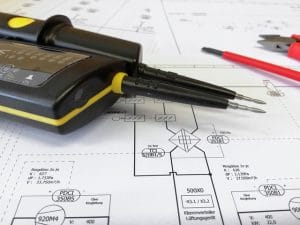
Field strength also drops off quickly with distance from the source, which is why strategic placement of panels, service equipment, and heavy-gauge wiring relative to living spaces is part of a low-EMF design for new-build wiring construction,
.
Where Low-EMF Electrical Design Typically Matters Most
this methodes prioritized in spaces where people spend extended time:
1. Residential Properties (High-Exposure Zones)
In residential design, the primary goal is to protect “sleeping zones” and areas where occupants remain stationary for hours at a time, as biological repair happens during deep sleep.
- Bedrooms & Nurseries: This is the absolute highest priority. The human body is most vulnerable to EMFs during sleep when cellular regeneration occurs. Keeping headboards away from high-current risers, smart meters, or backing utility panels is crucial.
- Home Offices: With the rise of remote work, professionals spend 8–10 hours a day sitting in one spot, often surrounded by computers, routers, and under-desk wiring.
- Living Rooms & Basement Rec Rooms: Areas where families congregate to watch TV or play games. Basement rec rooms deserve extra attention because they are often physically close to the home’s main electrical panel, incoming utility lines, and concrete-slab grounding systems.
- Rooms Adjacent to High-Load Areas: Any room sharing a wall with, or positioned directly above/below:
- The main electrical panel (breaker box).
- Large appliances (refrigerators, heat pumps, or electric water heaters).
- The smart meter utility board.
2. Commercial & Institutional Properties (Sensitive Occupants)
In commercial spaces, low-EMF design is typically prioritized either due to the vulnerability of the occupants (children, patients) or to prevent interference with sensitive equipment.
- Daycares & Schools: Developing nervous systems in infants and children are more sensitive to EMF exposure. Rest areas, play zones, and classrooms are key candidates for low-EMF layout planning (e.g., keeping main feeds and Wi-Fi access points far from classrooms).
- Healthcare Facilities & Hospitals: Patient Recovery Rooms: Similar to home bedrooms, patients healing from illness or surgery benefit from biological environments with minimal external stressors.
- Holistic Health & Wellness Centers: Chiropractors, naturopaths, and therapy clinics often use low-EMF design as a core pillar of their patient-centric, clean-space philosophy.
- Dental & Medical Imaging Clinics: Highly sensitive diagnostic equipment (like digital X-rays, 3D cone beam scanners, or EEG machines) can experience image distortion or data artifacts if exposed to high ambient AC magnetic fields from poor building wiring.
- High-Density Corporate Offices: Specifically in server rooms, local networking hubs, and dedicated conference rooms where high-density wireless and structural wiring converge.
Our Low-EMF Design Process
Noradiation follows a structured process for every low-EMF project:
Step 1: EMF Assessment & Diagnosis.
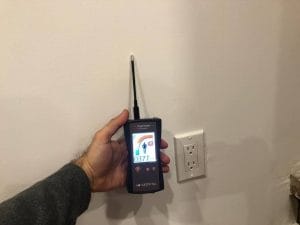
We measure 60 Hz magnetic fields, electric fields, dirty electricity, stray currents, bonding integrity, and current leakage to identify the exact source of elevated readings — not a general estimate.
Step 2: Panel Layout.
We rebalance circuit loads, identify unnecessary conductor loops, separate neutrals correctly, eliminate neutral-ground errors, and optimize conductor pairing at the panel, the starting point for the rest of the system.
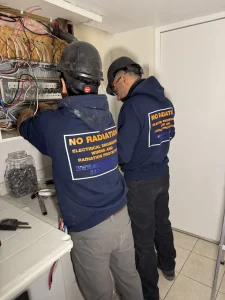
Step 3: Low-EMF Circuit Design.
We plan circuit routing to use shielded cable where warranted, apply distancing from bedrooms and living spaces, minimize conductor separation, and improve phase cancellation along each run.
Step 4: Wiring Corrections.
We fix parallel return paths, looping errors, open neutrals, poor grounding, and unnecessarily long runs, upgrading to armoured or twisted-pair cable where it improves field performance.
Step 5: EV Charger Installation.
EV chargers can meaningfully raise magnetic fields if installed without attention to conductor routing. We install using armoured cable, distancing from occupied spaces, optimized charger location, and dirty electricity filtering where needed.
Step 6: Post-Work Verification.
We re-measure every corrected circuit and document before-and-after field levels, confirming the correction achieved its intended result with no unintended side effects elsewhere in the system.
Low-EMF Wiring for Home Renovations
Low-EMF principles are far easier and less costly to apply during design than to retrofit later. For new builds and major renovations, this can include:
- Strategic placement of the electrical panel, service drop, and meter base relative to bedrooms and living areas
- Routing to avoid running heavy-gauge wiring directly under or around sleeping areas
- Keeping conductor pairs together throughout the run
- Using shielded (AC) cable in sensitivity-prioritized zones
- Low-EMF lighting circuit layouts and finishing devices
For builders and realtors, incorporating this at the design stage avoids rework, simplifies inspection, and supports a “healthy home” positioning for the finished property — without requiring any deviation from standard code compliance.
Who Typically Requests Low-EMF Wiring
This work is most often requested by:
- Homeowners building new or undergoing major renovations who want the system engineered correctly from the start
- Homeowners who’ve had elevated readings identified during a pre-purchase or general EMF assessment
- People working from home who spend extended hours in a single room
- Anyone who prefers a lower-EMF sleeping or living environment as a personal preference
Typical Measured Field Reductions
Based on our before-and-after verification measurements across completed projects, typical documented reductions are:
| Area | Typical Reduction |
|---|---|
| Bedrooms | 70–95% |
| Living areas | 60–90% |
| Basements | 40–80% |
| Panel wiring | 50–95% |
| Lighting circuits | 40–70% |
Results vary by property and existing wiring condition; these figures reflect measured field reduction, not a health outcome, and are confirmed on-site through our own testing rather than assumed.
Why This Matters as Homes Become More Electrified
As homes add more circuits, electronics, EV chargers, solar systems, and smart devices, the amount of wiring — and the number of opportunities for field-elevating errors — increases with it. Low-EMF design principles become more relevant, not less, as electrical demand in a typical home continues to grow.
Conclusion: Engineered Wiring, Measurable Results
Most people never think about how their home is wired beyond “does the light turn on.” At Noradiation, we combine electrical contracting, engineering, and EMF measurement to design and verify systems that meet code, function reliably, and keep magnetic fields as low as the wiring design allows, with results confirmed by measurement, not assumption.
Request an EMF consultation


One Response
Proper electrical wiring design is essential for ensuring safety, system reliability, and stable electrical performance in modern homes. Following good engineering practices, such as correct conductor routing and proper grounding, helps improve overall power quality and minimizes electrical issues