
Lighting renovation can cost a few hundred dollars when you are replacing existing fixtures, or several thousand dollars when you are adding new lighting points, controls and wiring across multiple rooms.
The cost is not determined only by the number of lights. Two homes may both need ten new lights, but the electrical work can be completely different. One may have open ceiling access and reusable wiring. The other may have finished ceilings, concrete construction, several control zones and wiring that must be changed before new fixtures can be connected.
To calculate a realistic budget, first separate what you want to replace from what you want to add. Then account for access, controls, fixtures, electrical notification, ceiling repair and HST with no doubts.
When I review a lighting renovation, I do not begin by multiplying one price by the total number of lights. I first separate simple replacements from new lighting points, then review how the wiring can reach each location. This is where most of the real cost difference is found.
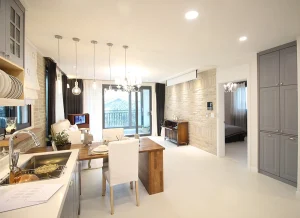
How Much Does a Lighting Renovation Cost?
For early budgeting in Toronto, Richmond Hill, Vaughan, Aurora, Newmarket and the surrounding GTA, a straightforward replacement of an existing light fixture may cost approximately $135 to $350 per fixture. When several LED pot lights are installed together with good ceiling access, a practical planning range is approximately $75 to $125 per light. Smaller installations or difficult finished ceilings may be closer to $150 to $250 per light.
These are planning ranges, not fixed Noradiation prices. The final cost depends on what is already installed and what must change to complete the work correctly.
| Lighting work | Planning range | What the range normally assumes |
|---|---|---|
| Replace an existing standard fixture | $145–$350 per fixture | Existing location, usable box and no major wiring changes |
| Install 7 or more pot lights with accessible ceiling space | $75–$125 per light | Standard LED fixtures, wiring and labour; confirm every inclusion |
| Install 1–6 pot lights | $150–$250 per light | Higher unit cost because setup and travel are divided across fewer lights |
| Install through a finished ceiling without attic access | Add approximately $20–$40 per light | Wire fishing is possible without extensive ceiling removal |
| Living room with 6–8 pot lights | Approximately $800–$1,500 | A standard installation; decorative fixtures, repair, permit and HST may be separate |
| Main-floor pot-light project | Approximately $2,000–$5,000 | Several connected areas such as the kitchen, hallway and living room |
Calculate Your Lighting Renovation Price in 7 Steps
Do not begin with a single total such as “I need twenty lights.” Divide the project into the following parts. This makes your budget more accurate and helps an electrician understand your plan.
1. Count the Fixtures You Are Only Replacing
A replacement means the new fixture will use the existing location and the existing electrical outlet. Examples include replacing a bedroom ceiling light, a dining-room pendant, or a bathroom vanity light.
For every replacement, record:
- Room and fixture location
- Type and weight of the new fixture
- Ceiling height
- Whether the fixture requires assembly
- Whether the existing box can support it
A large chandelier should not be calculated at the same rate as a lightweight flush-mounted light. The support, access and installation time are different.
2. Count Every New Lighting Point
A new lighting point is a location where no suitable electrical outlet currently exists. Pot lights, wall sconces, island pendants and new ceiling lights may all require cable routing, a new box or fixture connection and changes to switching.
Count electrical lighting points, not only lamps. A fixture containing five bulbs is normally one lighting point. Five separate pot lights are five points.
3. Identify the Ceiling Access
Access is one of the largest cost differences in lighting work. Use one of these three categories for each room:
- Open or accessible: The ceiling is open, or there is usable attic access above it.
- Finished but workable: Wiring must be fished through drywall with limited openings.
- Restricted: Concrete ceilings, difficult joist directions, insulation, multiple ceiling layers or areas where access equipment is required.
Do not assume that every wire can be routed without an opening. An electrician must consider the framing direction, obstructions and the path back to the switch or supply.
4. Count Lighting Zones and Controls
The number of control zones can affect the cost as much as the number of fixtures. For example, a kitchen may have pot lights, island pendants and under-cabinet lighting. If each layer operates separately, that is three control zones.
For each room, decide whether you need:
- A standard on/off switch
- A dimmer
- Control from two or more locations
- A timer or occupancy sensor
- A smart switch or lighting controller
The fixture, LED driver, and dimmer must be compatible. A device may turn the lights on and off but still perform poorly when dimmed. Limited dimming range, visible flicker, noise or unstable operation can result from an incompatible combination.
5. Add the Fixture Budget
Many installation prices do not include decorative fixtures. Keep the fixture budget separate so that changing a pendant or chandelier does not hide the actual electrical cost.
Your fixture list should include:
- Pot lights or integrated LED units
- Pendants and chandeliers
- Vanity and wall lights
- Under-cabinet lighting and drivers
- Dimmers, sensors and smart controls
6. Add ESA and Finishing Costs
New electrical installations and wiring alterations normally require an ESA notification. Residential notification fees start at approximately $88, but the applicable fee depends on the scope of work.
Also allow for drywall or plaster repair, priming and painting. Electrical contractors try to minimize openings, but a concealed route through a finished ceiling may require access. The electrical quotation should state whether surface restoration is included or completed by another trade.
7. Add HST and a Reasonable Contingency
Confirm whether the quoted price includes HST. For early planning, also keep a contingency for conditions that cannot be confirmed until the existing fixture or ceiling area is opened. A contingency should not replace a proper assessment; it simply prevents the budget from depending on perfect concealed conditions.
Lighting Renovation Cost Worksheet
You can use this table to organize the project before requesting an estimate. Enter your quantity, multiply it by the applicable planning range, and then add the project-specific items.
| Item to calculate | Your quantity | Planning amount | Your subtotal |
|---|---|---|---|
| Existing standard fixtures to replace | _____ | $145–$350 each | _____ |
| New pot lights in a larger accessible installation | _____ | $75–$125 each | _____ |
| New pot lights in a small installation | _____ | $150–$250 each | _____ |
| Finished-ceiling access premium | _____ | Approximately $20–$40 per affected light | _____ |
| Dimmers, timers or sensors | _____ | Confirm device and installation price | _____ |
| Decorative fixtures and smart controls | _____ | Based on selected products | _____ |
| ESA notification | 1 project | Starts at approximately $88; scope dependent | _____ |
| Drywall, plaster and painting | As required | Separate trade estimate if excluded | _____ |
| HST | 13% | Apply to taxable project cost | _____ |
This worksheet produces an early budget, not a final quotation. Do not apply the lowest per-light rate to every condition. A small project, concrete ceiling, high fixture or new wiring path must be calculated differently.
Plan the Lighting by How You Use Each Room
A common mistake is choosing the number of lights before deciding what the room needs. Lighting should be planned around the activities in the space.
| Room | What to include in your count | Cost items that are often missed |
|---|---|---|
| Kitchen | General ceiling lighting, island pendants and work lighting below cabinets | Separate zones, cabinet wiring, drivers and coordination with cabinetry |
| Living room | General lighting, a feature fixture and task or accent lighting where required | Dimming, fireplace or television layout, high ceilings and finished-ceiling access |
| Dining room | Feature fixture and any supporting ceiling or wall lighting | Relocating the outlet to align with the table and reinforcing a heavy fixture |
| Bathroom | Vanity lighting, general ceiling lighting and shower-area lighting where planned | Product suitability for the location, switching and coordination with fan or mirror |
| Bedroom | General lighting plus reading or wardrobe lighting where useful | Bed position, dimming and control from more than one location |
| Basement | Lighting for separate rooms, stairs, storage and mechanical areas | Finished ceilings, multiple zones and coordination with a broader renovation |
Example Calculating a Living-Room Lighting Upgrade
Assume a homeowner wants six new pot lights, one dimmer and no decorative fixture. The ceiling is finished, and there is no attic above the room.
- Six lights place the project in the small-installation range rather than a high-volume rate.
- Use approximately $150 to $250 per light for early planning: $900 to $1,500.
- Add the dimmer and any required switching work.
- Add the ESA notification if required for the installation.
- Add ceiling repair and painting if they are not included.
- Add HST.
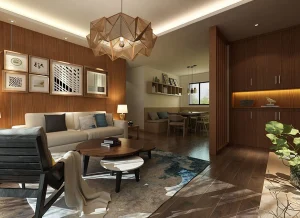
The homeowner should therefore not describe this only as “six lights.” The complete scope is six new lighting points, a new control, concealed wiring through a finished ceiling, ESA requirements and surface restoration. That description produces a more useful estimate.
Why Two Lighting Quotations Can Be Very Different
Before comparing totals, confirm that both contractors are pricing the same work. One quotation may include the LED units, wiring and notification. Another may cover labour only.
Check these items line by line:
- Exact fixture quantity and model
- New wiring versus reuse of existing wiring
- Number of switches and control zones
- ESA notification and inspection
- HST
- Ceiling openings and surface repair
- Fixture assembly and structural support
- Warranty on products and installation
A low advertised price per pot light may be correct for a large, accessible installation. It should not automatically be applied to a small job, a concrete ceiling or a project requiring new circuit work.
Why a Lighting Project Becomes an Electrical Renovation
Lighting work becomes part of a broader electrical renovation when the project involves more than adding or replacing fixtures. Examples include changes to several circuits, significant rewiring, corrections to existing electrical work or coordination with open walls during a full renovation.
Modern LED lighting usually adds a relatively small electrical load. Lighting alone does not automatically mean the electrical panel must be upgraded. The existing circuit condition, breaker space, wiring arrangement and complete renovation plan should be assessed before recommending panel work.
- If your project includes broader wiring or electrical-system changes, use our electrical renovation cost guide.
- For new construction or an addition with open framing, use the new-home electrical wiring cost guide.
Does Every Lighting Change Require an ESA Notification?
No. Ontario rules provide limited exemptions for certain like-for-like replacements. However, the details matter.
A replacement generally needs to remain in the same location, be interchangeable with the existing equipment and avoid installing, extending, altering or repairing the electrical wiring. Changing a surface-mounted light to recessed lighting is not considered a simple like-for-like replacement and requires notification.
The rules also differ depending on who performs the work and whether the property is an owner-occupied single dwelling, rental property or high-rise condominium. For that reason, permit requirements should be confirmed from the actual scope rather than assumed from the number of fixtures.
Common Questions About Lighting Renovation Cost
Is it cheaper to install several pot lights at once?
Usually, yes. Travel, setup, layout and testing can be divided across more fixtures. This reduces the unit price when the lights are installed under similar conditions. It does not mean that adding unnecessary lights is a good design decision.
Does the pot-light price include the fixture?
Sometimes. Some contractors include a standard LED unit, wiring and labour in the per-light rate. Others separate materials from labour. The quotation should identify the fixture model and every exclusion.
Will the electrician repair and paint the ceiling?
Not always. Small access openings may still require a drywall finisher and painter. Ask who is responsible before work begins, especially when the ceiling has a continuous finish that may need repainting beyond the repaired area.
Do I need a panel upgrade for new LED lighting?
Not automatically. LED lighting loads are normally modest. Panel or circuit work depends on the existing electrical system and the full renovation scope, not simply the number of LED lights.
What should I prepare for an accurate estimate?
Prepare a room-by-room fixture count, photos of the ceilings and existing switches, ceiling heights, product preferences and information about attic or unfinished access. Plans are useful when lighting is being coordinated with a kitchen, basement or full-home renovation.
Plan the Lighting Before the Ceiling Is Finished
The best time to make lighting decisions is before drywall, cabinets and decorative finishes are complete. At that stage, wiring routes and control locations can be coordinated with the room layout instead of being added later through finished surfaces.
Noradiation Inc. reviews the existing electrical conditions, the proposed lighting points, controls, access and applicable ESA requirements before defining the work. This allows the estimate to be based on the actual system rather than only a price per fixture.
To discuss your lighting plan, prepare your worksheet, room photos and any renovation drawings, then contact Noradiation for an assessment.